The time of the ” wolf” software person is here and it is the biggest force in the digital economy now. For a time the software industry was like a closed castle. To even get to the door you needed to have a degree in computer science lots of experience in engineering or a company that could give you a lot of money.
In the 2020s starting a software company was still a big risk that only people with a lot of money and technical knowledge could take.
By 2026 the things that made it hard to get into the software industry are gone. We are now in the time of the Democratization of Software, where the people who know a lot about an area are in charge not the programmers.
Today the people who start the successful companies are not always the best at writing code. In fact many of them have never even written any code in JavaScript or Python. They are the people who manage logistics and know why a warehouse inventory system has problems every Tuesday afternoon. They are the people who make sure companies follow the rules and see where sized manufacturers go wrong. They are the therapists who know why patients stop coming back.
These experts are using No-code development and visual programming to turn what they know into companies that make money. They are building software companies. Micro-SaaS businesses. Without having to worry about making mistakes in their code setting up servers or moving databases.
Let us be very clear about what thiss. This is not a way to get rich quickly. This is not about making money while you do nothing. Those ideas have hurt a lot of people who wanted to start their companies.
This is about building something that will last. It is about finding a problem that a group of people have solving it in a very efficient way and turning that solution into a company that can be sold. It is, about making a Minimum Viable Product that works like a crowbar. It is small and simple. It can make a big difference.
Phase 1: Identifying the “Micro-Pain” (Niche Selection)
The graveyard of failed SaaS startups is filled with founders who tried to boil the ocean. The biggest mistake new founders make is trying to build “the next Facebook,” a “better CRM,” or a “universal project management tool.” In the Micro-SaaS ecosystem of 2026, breadth is the enemy.
Why? Because generalist software is already owned by giants like Salesforce, Asana, and Monday.com. You cannot outspend them, and you likely cannot out-feature them. But you can out-specialize them.
The Power of Vertical SaaS
Instead of building a project management tool for everyone, the winners of 2026 are building AI-driven compliance monitoring for mid-sized medical manufacturers. Instead of a generic accounting dashboard, they are building inventory forecasting for independent coffee roasters.
This is the power of Vertical SaaS (Software as a Service for a specific industry). By focusing on a highly regulated or specialized niche, you achieve three things:
- Reduced Competition: The giants ignore you because your market is “too small.”
- Higher LTV (Lifetime Value): Your software becomes indispensable to a specific workflow. Switching costs are high because you understand the jargon, the regulations, and the seasonal rhythms of that industry.
- Word-of-Mouth Velocity: Plumbers talk to plumbers. Realtors talk to realtors. When you nail a solution for a vertical, your customers become your sales force.
Validating Market Demand with No-Code Prototypes
Before you build a single screen, you must find a “hair-on-fire” problem. This is a problem so painful that a business is currently solving it with messy, broken, or manual methods. You do not need a survey. You need to look for the smoke.
The 2026 “Burnout Signal”:
Recent industry data shows that 67% of remote workers report “Burnout Signals”—constant fatigue, context switching, and administrative overwhelm. This has turned “Mental Health Tracking for HR” into a top-tier Micro-SaaS niche. But note the specificity: not “health tracking,” but “automated wellness check-ins for distributed teams in the EU” (which also covers GDPR compliance).
The “Micro-Pain” Framework:
Walk into any small-to-medium business and look for the Excel spreadsheet from hell. You know the one. It has 15 tabs, broken formulas, color-coded cells that only one person understands, and it is emailed around every Friday. If a business is “brute-forcing” a solution with spreadsheets or manual emails, there is a Micro-SaaS opportunity waiting to be claimed.
Pro-Tip: AI-Wrappers vs. Workflow (The 2026 Distinction)
Here is a critical insight for this era: In 2026, the value of your software is not the AI. Anyone with a credit card can access an OpenAI, Anthropic, or Google Gemini API. The AI model itself is a commodity, like electricity.
The value—your moat—is the industry-specific workflow you build around that AI. An “AI lawyer” is a worthless commodity because there are ten thousand of them. But a “Contract Review Workflow for Boutique Real Estate Firms that integrates with DocuSign and highlights local zoning risks automatically”? That is a business. You are not selling artificial intelligence; you are selling applied intelligence to a specific context.
Phase 2: The 2026 No-Code Tech Stack
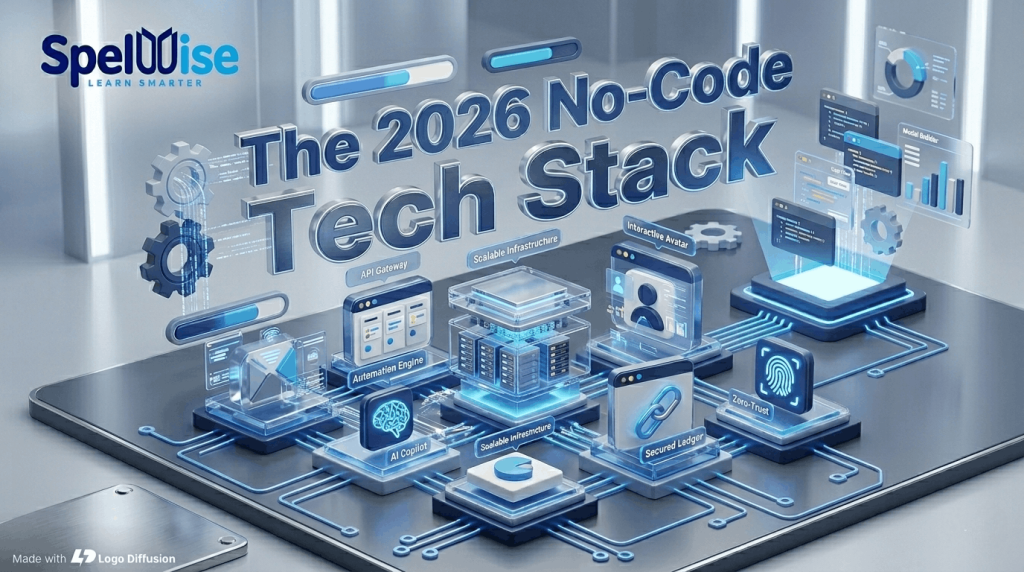
The tech stack is no longer a monolithic choice where you pick one platform and die on that hill. To build for Product-Led Growth (PLG) and low-latency automation, modern founders use a “Hybrid Path” that prioritizes API-first architecture. You are no longer a “Bubble developer” or a “FlutterFlow developer.” You are a solution architect who assembles best-in-class components.
The Professional Utility Matrix
| Platform | Best For | Typical Build Time | Key Strength |
| Bubble | Complex web apps with high logic, multi-user permissions, and marketplaces. | 4–6 Weeks | Ultimate flexibility on the front-end. |
| FlutterFlow | Native mobile apps (iOS/Android) with smooth animations and device features. | 3–5 Weeks | Native performance and code export. |
| Softr | Client portals, simple directories, internal tools on top of Airtable. | 1 Week | Speed of execution for simple interfaces. |
| Xano | Heavy data processing, scalable back-ends, complex API aggregation. | Scales to 1M+ users | The “brain” of your operation. |
| Lovable / Adalo | Rapid AI-integration prototypes and AI-wrapper apps. | 1-2 Weeks | Autonomous handling of 80-90% of AI use cases. |
Choosing Your Engine
For High Logic And Scale:
You should use Xano for the end, which is the database, logic and API and Bubble for the front-end, which is what the user actually clicks on. This is what professionals do. It lets you have hundreds of thousands of users without slowing down. If Bubble is slow one day your logic is still safe in Xano.
For Mobile-First Experiences:
FlutterFlow is the best for making things work well on mobile devices. It has a feature that lets you export code to GitHub. This is important because it means you are not stuck with FlutterFlow if you do not like it. If you outgrow FlutterFlow you can take the code. Hire someone to help you. You will never lose the work you did.
For AI Integration:
Now there are tools like Lovable or Adalo that can do most of the work for you when it comes to using intelligence. They can do about 80 to 90 percent of the work on their own. You can tell them what you want like making something that listens to sales calls. Updates HubSpot and they will make the basic structure in just a few hours, not weeks.
For Internal Tools:
If you are making a tool for one company to use, like a system for scheduling jobs Knack or Softr can help you get started really fast. You can make a working website with a password that people can use in one afternoon. Xano and Bubble are good, for High Logic And Scale. For internal tools Knack or Softr are better.
Phase 3: Building the MVP (Minimum Viable Product)
Let us talk about money. In the year 2026 a No-Code MVP usually costs between one thousand dollars and five thousand dollars to build. This is. The time you put in or the time a freelance developer puts in.
This is a difference, from the fifty thousand dollars or more that it used to cost for custom development just a few years ago.
The fact that it is cheaper to build a No-Code MVP changes the way we think about starting a business. Failing at a No-Code MVP is not a deal anymore. It is a lesson that does not cost a lot of money. You can try things and make changes to your No-Code MVP based on what your users tell you.
Bridging the Gap Between Expertise and Execution
Your goal is scaling without technical debt. You want the speed of No-Code with the discipline of traditional engineering.
- User-Centric Design: Focus obsessively on the “Time to Value” (TTV). How fast can a user solve their specific problem after signing up? If it takes longer than 2 minutes to see value, you will lose them. Strip away everything that isn’t essential to that “aha!” moment.
- Serverless No-Code: Utilize serverless back-ends. This is a technical term that means “you don’t pay for idle servers.” Your costs grow linearly with your user base. If you have 10 users, you pay pennies. If you have 10,000 users, your revenue covers the cost.
- Headless CMS: Keep your content (blog posts, landing page copy, help docs) separate from your application logic using a Headless CMS. This ensures your data remains portable. If you decide to rebuild your front-end in React tomorrow, your content doesn’t need to move.
Warning: Platform Risk & Data Ownership
Here is the gravest danger in the No-Code era: Platform Risk. What if your No-Code provider goes bankrupt? What if they change their pricing 10x overnight?
Even when using No-Code logic, you must ensure you own your data.
- Use Supabase (an open-source database) or GitHub Sync integrations.
- Insist on the ability to perform a raw SQL export of your customer data.
- SSPM (SaaS Security Posture Management) is a “Day 1” requirement in 2026. If you cannot prove to an enterprise client that their data is encrypted, backed up, and isolated, they will not sign your contract. Build your security narrative before you build your first feature.
Phase 4: Monetization & Growth
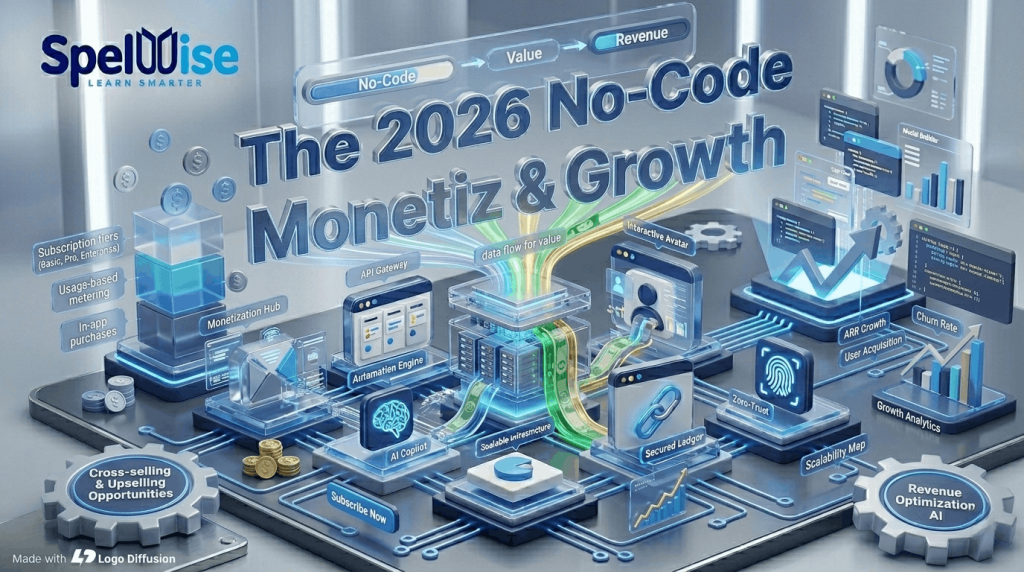
The subscription-based economy has matured. Consumers and businesses have “subscription fatigue.” To reach your first MRR (Monthly Recurring Revenue) goals, you need a strategy that focuses on retention as much as, if not more than, acquisition.
Metrics That Matter (Ignore the Vanity)
- Churn Rate: The percentage of users who cancel each month. In Micro-SaaS, a monthly churn above 3% is a slow death. High churn usually means one thing: you haven’t solved the “Micro-Pain” deeply enough. You built a band-aid, not a cure.
- LTV (Lifetime Value): How much a customer is worth over the entire time they stay with you. (Formula: Average Monthly Revenue per Customer ÷ Monthly Churn Rate).
- CAC (Customer Acquisition Cost): How much you spend to get a customer. In the early days, your CAC should be zero (organic outreach, forums, LinkedIn DMs). Only pay for ads when your LTV is 3x your CAC.
- MRR vs. Asset Value: Remember the asset mindset. Every $1 of MRR adds significantly to the valuation of your business if you choose to sell. At a 3x multiple, adding $100 MRR adds $3,600 to your exit price.
The Growth Flywheel
You do not need a marketing budget. You need a flywheel.
- Solve for One: Get your first 10 customers manually. Go to niche subreddits, IndieHackers, or industry Slack groups. Offer to solve their problem for free in exchange for feedback. Do things that don’t scale—like manually onboarding each user via Zoom.
- Automate the Workflow: Use the feedback from those 10 customers to automate the most annoying parts of their day. If they ask for a report, build the report. If they ask for a Slack notification, build the integration.
- PLG (Product-Led Growth): Create “viral loops” inside the product. For example, if a user invites a teammate, both users get a feature upgrade. The product should get better as more people in an organization use it. This is how Slack grew without a sales team.
Phase 5: Common Pitfalls to Avoid
Many founders fail even when they have tools and a good niche. They get stuck in what’s called “The Feature Trap.”
Pitfall 1 is Over-Engineering. You do not need something with a lot of features. You just need one thing that works well. Your goal is to make the thing for a specific job not to make something that can do everything. Try not to add features that’re nice but not necessary. Every extra thing you add means work to keep it running.
Pitfall 2 is Ignoring Security. Some people think that because they are small hackers will not bother with them.. That is not true. There are computers checking the internet all the time for weaknesses. Even small businesses that handle names, emails or payments need to follow rules like GDPR and SOC2 in 2026. Not knowing about these things is not an excuse it is a problem.
Pitfall 3 is The “Passive” Myth. We need to stop thinking this way. Making a SaaS is not something you can just set and forget. You have to keep it running help customers and make sure people still want what you are offering. You are making a business not just selling something. You will have to work a lot, like 5 to 15 hours a week just to keep things going and more if you want to grow.
Pitfall 4 is Building in a Vacuum. Do not work on something for months without showing it to anyone. When you finally show it people might not want it. Show what you are working on early, like, on the day and get feedback. It might be hard to hear. It will help your business.
Conclusion: Your First $1,000 MRR
The numbers are very clear. The Micro-SaaS segment is going to get a lot bigger. It will go from $15.7 billion in 2024 to around $60 billion by 2030. Now we are in a good place for this growth. The Micro-SaaS tools are good enough for small businesses to make what they need. There are not too many specialized solutions out there yet. This is a time, for the Micro-SaaS segment. The Micro-SaaS window is open now. It will not stay open forever for the Micro-SaaS segment.
The ultimate “Information Gain” for a 2026 founder is understanding the Exit Strategy. A No-Code Micro-SaaS is not just a business; it is a highly liquid financial asset. Platforms like Acquire.com and Flippa have seen a massive uptick in “No-Code acquisitions,” where founders sell their 1-to-2-year-old projects for 3x to 5x annual profit.
Do the math. If you build a small tool that makes $2,000 profit per month ($24,000 per year), you could sell it for $72,000 to $120,000 in just 18 months. That is not a lottery ticket. That is a repeatable asset-building process.
You do not need a computer science degree. You need a problem that you understand better than anyone else, a hybrid No-Code stack, and the pragmatism to start building before you feel ready.
Whether you are a solopreneur looking for a side-hustle to replace a car payment, a consultant wanting to productize your methodology, or a lean startup founder aiming for a massive exit, the path is the same:
- Find the pain (the messy spreadsheet, the manual email).
- Build the logic (the workflow around the AI).
- Own the asset (the data, the code export, the MRR).
Your first $1,000 MRR is not out there in the clouds. It is waiting inside the workflows you are currently doing by hand, right now, at your own desk. Automate them. Package them. Sell them. The era of the lone wolf mogul is here—go claim your pack.