Is YouTube Considered Social Media? The Complete Guide
Open your phone right now and look at the YouTube app. When you tap that red play button, what exactly are you opening? Are you logging into a social media network to connect with others? Are you firing up a video search engine to learn how to fix a leaky faucet? Or are you simply turning on a streaming service to watch your favorite creator’s latest documentary?
The debate over how to classify YouTube has puzzled marketers, creators, and everyday users for years. While platforms like Facebook, X, and Instagram fit neatly into the social media box, YouTube stubbornly refuses to be categorized so easily.
This guide breaks down exactly what YouTube is, exploring its social features, its search engine roots, and why understanding its true nature completely changes how you should use the platform.
Table of content
Table of Contents
What Defines a Social Media Platform?
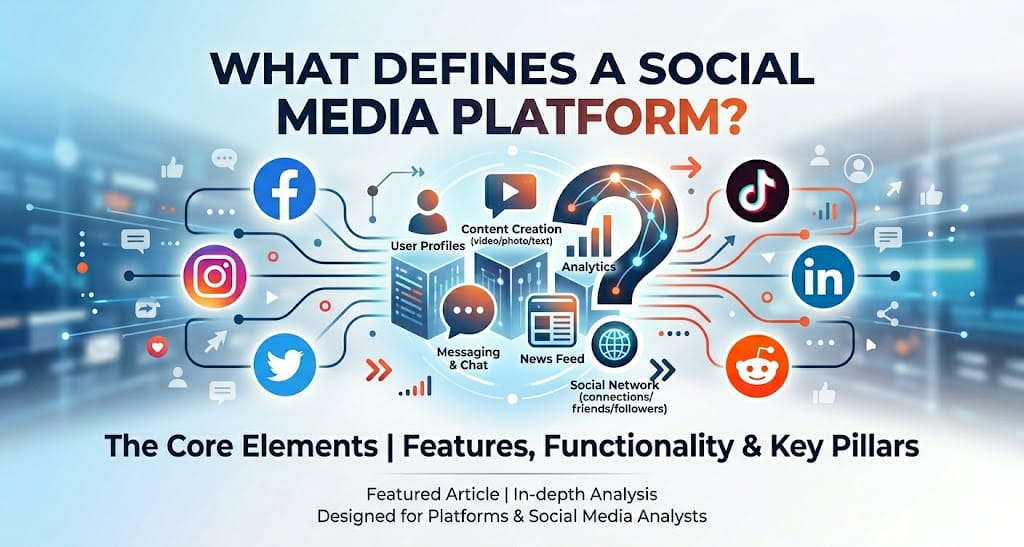
Before we decide if YouTube belongs in the social media club, we need to know the entry requirements. Social media platforms generally share a few core characteristics that separate them from static websites or traditional media.
To be considered social media, a platform typically needs:
- User Profiles: Individual accounts where people establish a digital identity.
- Two-Way Interaction: The ability to communicate back and forth, rather than just consuming information passively.
- Content Creation: Tools that allow users to generate and upload their own text, images, or videos.
- Network Building: Systems for following, friending, or subscribing to other users.
- Community Engagement: Features like comments, likes, shares, and direct messaging.
When you look at this list, YouTube checks almost every single box. But doing something and being defined by it are two different things.
The Case for YouTube as Social Media
If you argue that YouTube is a social media platform, you have plenty of evidence to back up your claim. Over the years, Google has continually added features that push YouTube closer to platforms like Instagram and TikTok.
Community Interaction and Feedback
Every video on YouTube functions as a mini-forum. The comment section allows viewers to discuss the content, argue with each other, and interact directly with the creator. Users can “like” videos, share them across other networks, and even collaborate through features like “Remix.” This level of engagement is the heartbeat of social media.
The Power of the Community Tab
YouTube realized that video alone wasn’t enough to keep creators and fans connected between uploads. Enter the Community Tab. This feature allows creators to post text updates, run polls, share GIFs, and post images. It looks and functions exactly like a Facebook or X feed, giving users a reason to scroll and interact without watching a single second of video.
The Rise of YouTube Shorts
The introduction of YouTube Shorts cemented the platform’s social media status. Designed to compete directly with TikTok and Instagram Reels, Shorts offers an endless, algorithm-driven scroll of vertical, bite-sized videos. It encourages rapid consumption, quick likes, and fast sharing—the exact behavior that drives modern social media addiction.
Live Chat and Real-Time Connection
When creators host live streams or premiere a new video, the live chat feature creates a shared, real-time experience. Viewers talk to each other, donate money through Super Chats to get noticed, and form tight-knit communities. This real-time social layer is identical to what you find on Twitch or Instagram Live.
The Case for YouTube as a Search Engine
Despite its social features, many digital experts argue that calling YouTube a social media platform misses the point entirely. To them, YouTube is a search engine. In fact, it is the second-largest search engine in the world, sitting right behind its parent company, Google.
Intent-Driven Behavior
Think about how you use Instagram versus how you use YouTube. You usually open Instagram to see what your friends are doing or to kill time scrolling through a feed. You open YouTube when you have a specific goal in mind.
Users turn to YouTube with clear intent:
- “How to tie a tie”
- “Best budget smartphones 2026”
- “Full body workout for beginners”
- “Summary of World War II”
This behavior mimics Google search exactly. Users type a query into the search bar, review the results, and click the one that best answers their question.
Evergreen Content Value
On platforms like X or Facebook, a post has a lifespan of a few hours. After that, it gets buried in the feed, never to be seen again. YouTube operates differently. A helpful tutorial uploaded five years ago can still generate thousands of views today because people are still searching for that specific topic. This evergreen nature aligns perfectly with search engine mechanics, where relevance trumps recency.
YouTube as a Content Streaming Platform
To complicate matters further, there is a third argument: YouTube is a streaming service competing with Netflix, Hulu, and traditional television.
Long-Form Consumption
While Shorts cater to the social media crowd, traditional YouTube videos are getting longer. Creators routinely upload hour-long video essays, deep-dive documentaries, and high-production vlogs. Viewers consume this content by casting it to their smart TVs, sitting back on the couch, and watching it just like a television show.
YouTube Premium and Television Integration
With the growth of YouTube Premium and the YouTube app pre-installed on virtually every smart TV, the platform heavily encourages lean-back viewing. When you watch a two-hour podcast on your living room television, you aren’t reading comments or checking the Community Tab. You are treating YouTube entirely as a broadcast network.
The Verdict: A Hybrid Digital Ecosystem
So, is YouTube considered social media? The most accurate answer is yes—but with a massive asterisk.
YouTube is a hybrid platform. It is a search engine that delivers video content, wrapped in a social media interface, with the viewing habits of a traditional television network.
Depending on how a user interacts with the app on any given day, its function changes:
- When you scroll through Shorts and leave comments: It is social media.
- When you type a question into the search bar: It is a search engine.
- When you cast a 45-minute documentary to your TV: It is a streaming platform.
Why This Classification Matters
Understanding YouTube’s hybrid nature isn’t just a fun debate for tech nerds; it is critical for anyone trying to build an audience or market a business on the platform. If you treat YouTube purely as a social network, or purely as a search engine, you will fail.
Strategy for Creators and Marketers
To succeed on YouTube, you must respect all three of its identities simultaneously.
- Optimize for Search: Your titles, descriptions, and tags need to target specific keywords. You must create content that answers questions people are actively searching for.
- Engage like Social Media: You cannot just upload a video and walk away. You need to reply to comments, use the Community Tab to build loyalty, and post Shorts to capture the fast-scrolling audience.
- Produce like Streaming: The actual quality of your content matters. Your audio must be clear, your editing must keep attention, and your storytelling must rival traditional media to keep people watching through the end.
The Algorithm Cares About Both
The YouTube algorithm heavily weighs both search relevance and social engagement. A video might rank well in search because of good keywords, but if viewers don’t like, comment, or watch the whole thing (poor social engagement), the algorithm will quickly drop it from the rankings. Conversely, a video with a highly engaged social audience will get pushed onto the homepages of new viewers, acting much like the TikTok “For You” page.
Conclusion
Is YouTube considered social media? Yes, it holds all the necessary credentials to be part of the social media family. It fosters community, encourages user-generated content, and offers endless ways for people to connect.
However, putting YouTube strictly into the social media box limits its true power. It is an entirely unique digital ecosystem that combines the discoverability of a search engine, the community of a social network, and the entertainment value of television.
Whether you are a casual viewer, an aspiring creator, or a brand looking to expand your reach, the best way to approach YouTube is to embrace its complexity. Use the search bar to find answers, dive into the comments to find your community, and sit back to enjoy the show.