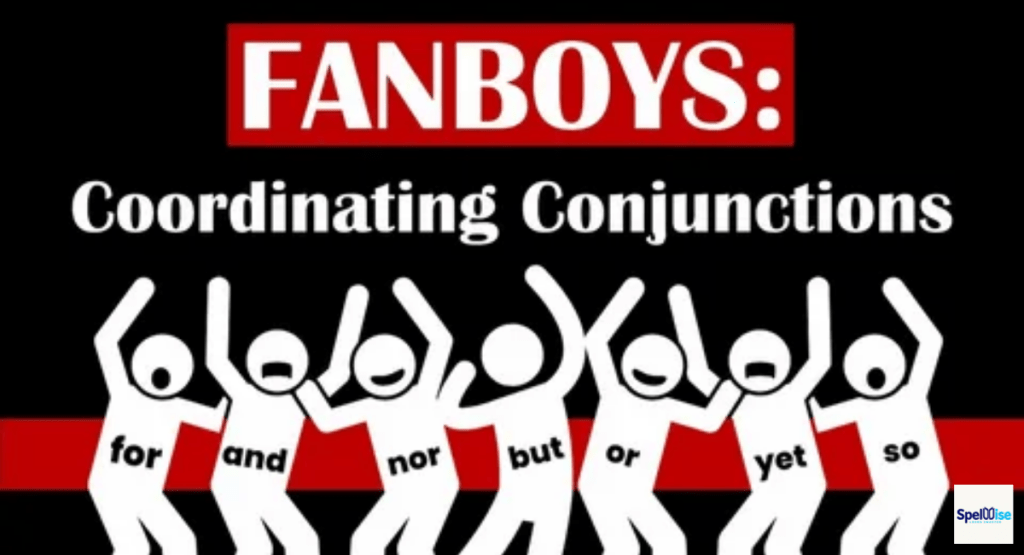
FANBOYS grammar is one of the basic ideas in English writing. It acts as the link that brings words, phrases, and independent clauses together. The word “FANBOYS” is a known memory tool. It helps writers remember the seven coordinating conjunctions. Those seven words are “for.” Nor But, Or. So. Knowing these seven words helps writers join sentences in a smooth way. It avoids repeated words. Helps build clear and complex thoughts without confusing grammar.
Many people who learn English and also those who create content for work often have trouble with sentence structure and correct punctuation. This is especially true when they try to figure out where to put commas. FANBOYS offers a way to fix these common writing problems. By learning how each conjunction works in a sentence, you can quickly make your essays, work emails, and creative writing better.
Let us look closely at FANBOYS and learn what each part of FANBOYS means. We will also talk about punctuation rules that involve FANBOYS. In addition, we will share the changes in how people use FANBOYS today. These tips will give you guidance so you can write with more confidence. If you are studying for a school test or you want to make your business emails clearer, mastering FANBOYS will change how you write.
What Are Coordinating Conjunctions, and Why Does FANBOYS Matter?
Coordinating conjunctions are words that join parts of a sentence, such as two single words, two phrases, or two independent clauses. An independent clause is an idea that has a subject and a verb and can stand alone as a sentence. The main job of FANBOYS is to link these ideas into smooth compound sentences so that your writing moves naturally from one point to the next.
Understanding FANBOYS is very important because it changes how varied and easy a text feels. Without coordinating conjunctions, written words often feel choppy, repetitive, and broken apart. By using FANBOYS you show a higher level of language skill and let your readers follow your train of thought without extra trouble.
The Basic Punctuation Rule
The important rule when working with FANBOYS is that a comma must always precede the conjunction when it links two independent clauses. For instance, in the sentence “She wanted to go for a walk, but it began to rain,” both halves are sentences joined by a comma and a conjunction. However, if you are merely joining two words or short phrases, no comma is required.
Deep Dive into Each Component of FANBOYS

To use FANBOYS effectively, I find FANBOYS is essential to understand the function and logical connection that each individual conjunction brings to a sentence.
- For (Reason/Cause): FANBOYS functions to “because” to explain a cause or reason, though it carries a more formal tone. (Example: She stayed home because she was feeling unwell.)
- And (Addition): FANBOYS connects two ideas, items, or actions to build upon a point. (Example: Mark enjoys hiking. He loves outdoor photography.)
- Nor (Negative Addition): Links two statements together. Links also require the subject and verb to be inverted in the clause. (Example: He does not eat meat. Does he consume dairy?
- But (Contrast): Introduces an idea, exception, or direct contrast between two thoughts. Introductions also mark a shift in the sentence. (Example: The movie was long. It kept everyone entertained.)
- Or (Choice/Alternative): Presents options, possibilities, or alternative choices to the reader. Presents also give the reader a decision point. (Example: You can submit the report today or you can present it tomorrow.)
- Yet (Unexpected Contrast): Shows a contrast or outcome similar to “however” or “nevertheless.” The show also highlights a twist that catches the reader. (Example: The weather was freezing, yet they went swimming in the lake.)
- So (Result/Consequence): Indicates an outcome, effect, or result stemming from the first clause. Indicates also states the consequence that follows. (Example: The traffic was unusually heavy, so we arrived late to the meeting.)
Key Rules and Punctuation Guidelines for FANBOYS
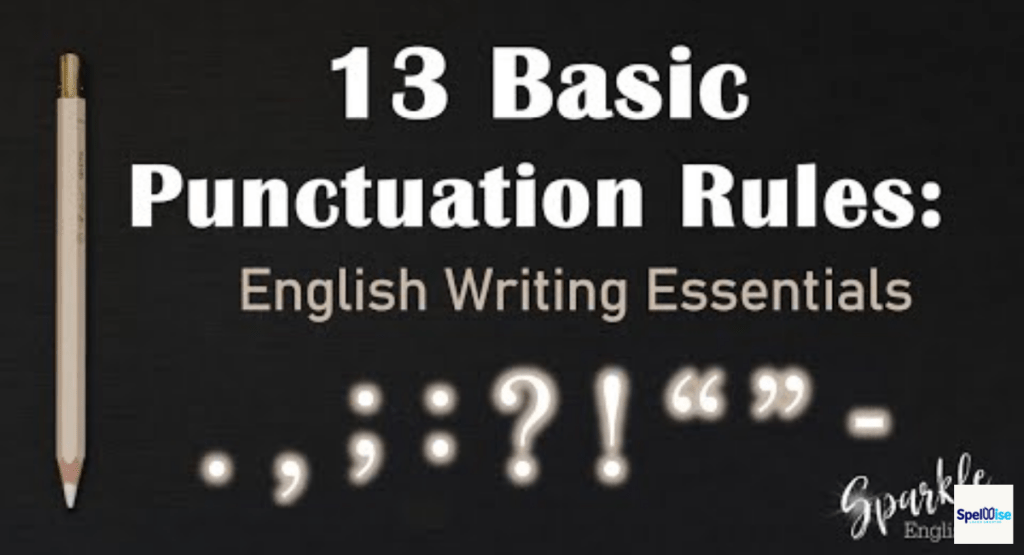
Punctuation errors are the common mistake writers make when using coordinating conjunctions. The basic rule says that a comma must come before the FANBOYS word whenever it links two independent clauses. For example:
“The package arrived on time, so we opened it immediately.” If the conjunction joins two verbs that have the same subject, then a comma should not be used. Take this sentence: “He cleaned the kitchen. Wash the dishes. “Here ‘washed the dishes'” is not a clause, so no comma is needed.
Also, when listing three or more things in a row, writers often place a comma before the conjunction. This is called the Oxford comma. It’s a style choice. It helps avoid confusion.
Common Mistakes to Avoid When Using FANBOYS
A primary error to avoid is the comma splice, which happens when two independent clauses are joined by a comma without a FANBOYS conjunction. For example, the sentence “I was tired I went to sleep” is incorrect. It should read, “I was tired, so I went to sleep.” Another widespread mistake is the creation of run-on sentences, where two complete thoughts are fused together without any punctuation or conjunctions. Finally, writers often forget to invert the subject and verb when using “nor.”his leads to phrasing such as “He does not lie, nor does he cheat.” The correct form is “He does not lie, nor does He cheat.”
FANBOYS vs. Subordinating Conjunctions (Because, Although, Since)
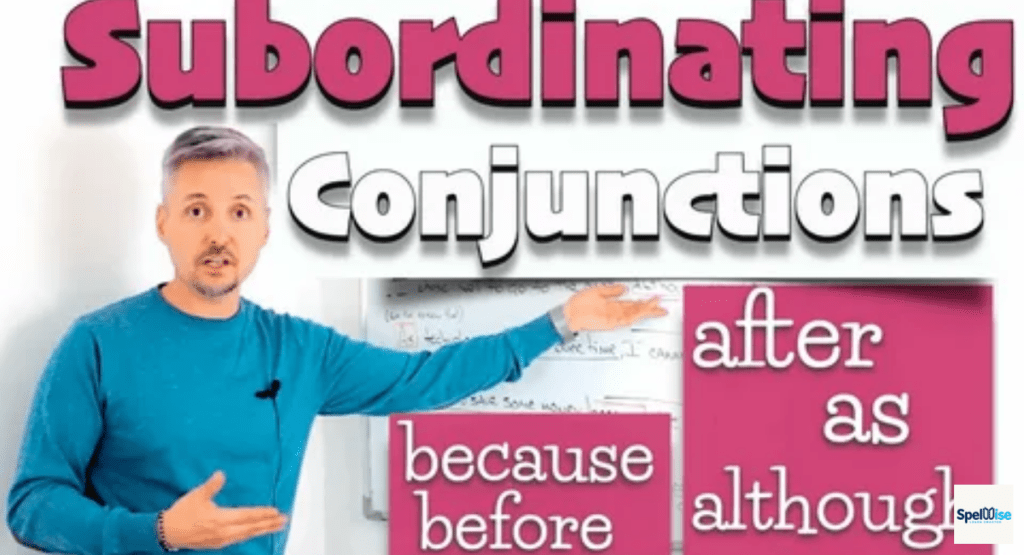
Distinguishing between coordinating conjunctions such as FANBOYS and subordinating conjunctions such as “because,” “although,” “since,” and “while” is very important. I find that knowing this difference helps me write clearly. Coordinating conjunctions, like FANBOYS, connect two clauses that’re on the same level of grammar. Subordinating conjunctions, on the other hand, attach a clause to a main independent clause. Knowing this structural difference helps writers avoid mistakes and gives writers control over how fast or slow a sentence feels. Using a mix of coordinating conjunctions and subordinating conjunctions creates engaging prose that keeps readers interested.
What’s New in Modern Grammar Usage for FANBOYS
Modern digital communication and contemporary publishing standards have changed how FANBOYS conjunctions are used today.
Starting Sentences with Conjunctions:
Traditional grammar rules say that a sentence should not begin with the word “And” or the word “But.” Modern journalism and creative writing allow a sentence to begin with “and” in order to make a point stronger and to add a special touch.
- Streamlined Digital Punctuation:
In paced digital media short compound sentences often omit the comma before FANBOYS even when the meaning remains clear.
- Oxford Comma Adaptations:
Style guides in fields still argue about whether the Oxford comma is needed in a list of items. This means writers can choose what to use depending on what the publisher wants.
- Concise Business Communication:
Professional email writing is using compound sentences connected by “so” or “and” to keep messages clear and to the point.
Core Features of FANBOYS Grammar
- Mnemonic Simplicity:
The FANBOYS acronym makes it easy to remember the seven coordinating conjunctions. It helps writers at every level recall them fast without needing to think about grammar rules.
- Sentence Structure Control:
It gives writers the tools they need to turn sentences into well-built compound sentences. This makes writing sound more mature, clear, and polished.
- Punctuation Precision:
Using FANBOYS helps avoid mistakes like comma splices and run-on sentences. That leads to grammar when writing reports or any kind of document.
- Enhanced Narrative Flow:
- Coordinating conjunctions like “for” and “nor.” Or yet and so help connect related ideas smoothly. They keep the thought moving. Don’t let the reader get stuck. Because of this the text flows better. Is easier to read.
Summary Table: FANBOYS Overview
| Conjunction | Function | Example Sentence |
| For | Explains a cause or reason | She wore a coat, for it was cold outside. |
| And | Adds one idea to another | I love coffee, and my brother prefers tea. |
| Nor | Connects additional negative ideas | He cannot swim, nor can he ride a bike. |
| But | Shows contrast or exception | The test was hard, but she passed easily. |
| Or | Offers a choice or option | We can walk, or we can take the bus. |
| Yet | Indicates unexpected contrast | He was exhausted, yet he kept running. |
| So | Shows a result or consequence | It started raining, so we went indoors. |
Pros & Cons of Using FANBOYS
Pros:
- It improves the rhythm of sentences, the clarity of the text and the overall readability.
- It creates links between ideas that fit together.
- It helps native speakers form compound sentences without difficulty.
- Removes choppy sentences in academic and formal writing.
Cons:
- Using conjunctions can cause long wandering sentences.
- Putting commas before conjunctions often causes punctuation mistakes.
- Words such as ‘For’ and ‘may’ sound old‑fashioned in speech.
- Using ‘So.’ And it too often makes writing feel repetitive and flat.
My Personal Experience
I have spent a lot of time working on grammar and professional writing. I have found FANBOYS to be one of the helpful tools for making a writer work better in a quick way. On my journey with writing, my sentences were either too short. Had comma splices when I tried to express something more complex. Learning the exact rules around FANBOYS changed the way I put together my paragraphs completely.
Now as I keep editing content and helping students, using the FANBOYS method is still the way to fix issues with how sentences flow. It provides writers with a checklist they can use to check their own writing quickly. This helps make sure every compound sentence follows the rules and reads smoothly and in a way.
FAQs
Can I start a sentence with “And” or “But”?
Yes, modern English allows starting sentences, with conjunctions to highlight or add a style to the writing.
Is a comma always required before a FANBOYS conjunction?
A comma is needed only when the conjunction connects two separate sentences.
What is the main difference between “but” and “Yet”?
“. Shows regular contrast,” while “yet” adds more of a surprise or something that wasn’t expected.
Is “for” commonly used as a conjunction in spoken English?
No, using “for” as a conjunction is usually found in literary or written language.
How does word order change after using “Nor”?
When you use the word ‘nor,’ you must switch the order of the verb and the subject in the second clause.
What is a comma splice?
When you use the word ‘nor,’ you must switch the order of the verb and the subject, in the second clause.
Conclusion
I find FANBOYS more than a memory trick. FANBOYS is a framework that I must master to use English syntax and punctuation correctly. When I use these seven coordinating conjunctions properly I can build compound sentences that help me convey my ideas to anyone.
With practice and by focusing on punctuation rules using FANBOYS, it will feel natural. Adding these connectors to your writing will quickly make your work clearer, more rhythmic, and better overall.