For those people who have translated before from Spanish into English and vice versa, I’m sure you’ve encountered the word “ya” and realized that dictionaries can’t provide you with all possible meanings that you could derive from one word. This word could be translated in different forms according to the context, that is, already, now, soon, or anymore.
While in English, grammar provides indications for when the action takes place through the use of tenses, in Spanish, this is accomplished through the word “ya”.
With this comprehensive guide, you’ll learn how to use “ya” in Spanish and become a better translator.
What does “ya” actually mean in Spanish?
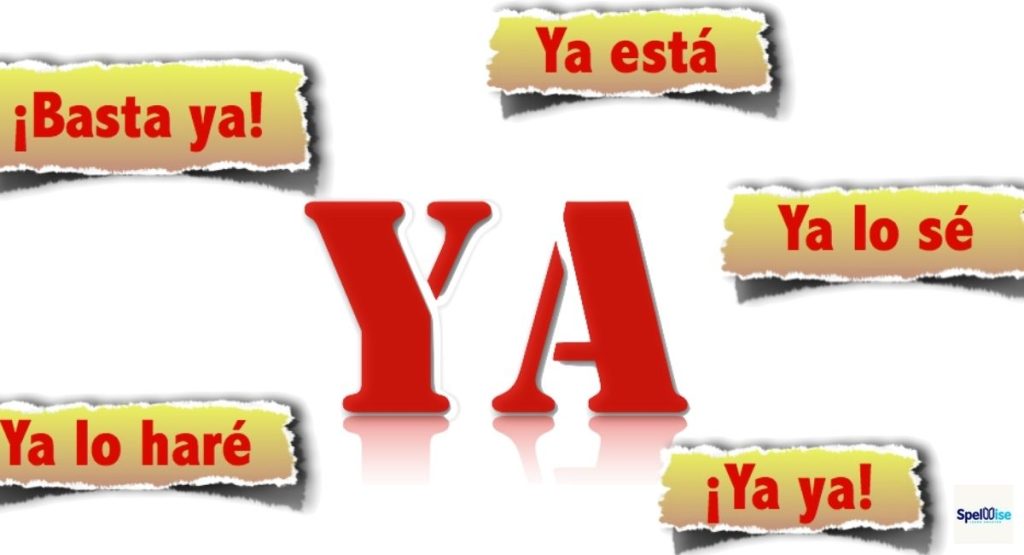
Ya is a highly versatile and widely-used word in conversational Spanish language. It acts not only as a time signal but as an emotional signal too. Being untranslatable directly into English via the meaning provided in the dictionary, Ya will present certain challenges for learners in terms of translation.
Depending on the context, Ya could be used to denote that something had taken place before the expected time, to show impatience, or to agree with someone. Recognizing the context use of the word would be the first step towards successful translation from Spanish to English.
How do you translate “ya” into English?
Translation of ya implies that one should take into account verb tense and context of the whole sentence, not just search for a translation word by word. Auxiliary verbs and time adverbs that should be used in order to express time in English should be chosen, depending on the context of the sentence.
For instance, if ya is used in order to describe actions already completed in the past, it translates to “already”. If it describes actions happening at the very moment, it translates to “now” or “right away”.
What are some examples of “ya” in everyday sentences?
Seeing how ya functions in everyday conversations makes it much easier to grasp its shifting translations. For example, saying “Ya lo sé” translates directly to “I already know it,” where it emphasizes that the information is already known.
On the other hand, a phrase like “Ya voy” shifts the meaning entirely, translating to “I’m coming now” or “I’m on my way right away.” Similarly, adding a negative like “Ya no vivo aquí” means “I don’t live here anymore,” proving how versatile this single word can be in context.
Why is direct translation a grammar mistake?

Using literal translation of ya in most cases goes against English grammar since English language needs clear indicators regarding time, while Spanish uses just one word to convey a number of time indicators. If all occurrences of ya are translated as “already,” this would produce unnatural sentences where the word should be translated as “now” or “anymore.”
Literal translation is likely to make unnatural sentence structures in English since Spanish language gives flexibility to the word ya in determining whether the verb should indicate urgency or completion, and English grammar needs one to analyze the entire sentence to pick an appropriate auxiliary or adverb.
How do you know which English word to use for “ya”?
The choice of the English word depends on the analysis of the verb tenses in the sentence and the intentions of the speaker. In case there is an indication that the sentence suggests something being completed, the use of “already” is possible; in any other situation, “now” or “soon” can be applied.
Listening to the native speakers using the word in various situations contributes to the development of the necessary intuition. Correct application of the English temporal word with ya will allow you to translate everything correctly.
Mastering the Nuances of “Ya”
The word “ya” acts as a bridge between past actions and present realities, letting speakers signal completion, urgency, or change with just a single syllable. By mastering how to swap it for “already,” “now,” or “anymore” based on context, you can instantly eliminate clunky translations and write natural, grammatically precise English sentences.
Quick Reference Guide to “Ya” Translations
| Spanish Term | Primary English Translation | Context & Usage Example |
| Ya | Already | Ya lo hice. (I already did it.) — Indicates a completed action. |
| Ya | Now / Right away | Ya voy. (I’m coming now.) — Shows immediate action or urgency. |
| Ya no | Anymore / No longer | Ya no vivo aquí. (I don’t live here anymore.) — Signals the cessation of a state. |
| Ya | Oh, I see / Got it | Ah, ya. (Ah, okay / I understand.) — Used to express comprehension or agreement. |
Pros:
- Captures the exact emotional tone and urgency of the original Spanish speaker.
- Prevents awkward, robotic word-for-word literal translations in English.
- Enhances overall writing flow and makes sentences sound completely natural.
Cons:
- Requires a solid understanding of English verb tenses and auxiliary structures.
- Can lead to confusion because a single Spanish word maps to multiple English equivalents.
- Demands careful attention to surrounding context rather than relying on a quick dictionary lookup.
My Experience
When I first started learning Spanish, I used to translate ya as “already” everywhere, which made my sentences sound completely unnatural. Once I stopped relying on a single literal meaning and started paying attention to how context dictates whether it means “now,” “already,” or “anymore,” my English translations finally started flowing the way they were supposed to.
FAQS
What does “ya” actually mean in Spanish?
“Ya” is a versatile temporal marker in Spanish that changes its English meaning based on context, commonly translating to words like already, now, or anymore.
Why can’t “ya” be translated the same way every time?
Because it has multiple meanings depending on the sentence, using a single literal translation like “already” will often break English grammar rules and sound unnatural.
How do I know when to use “already” for “ya”?
You use “already” when “ya” is paired with a completed past action to show that something happened sooner than expected.
When does “ya” mean “now” or “right away”?
It translates to “now” or “right away” when used with present tense verbs to signal urgency or an immediate action happening in the moment.
How does “ya no” change the meaning of a sentence?
When combined with negation as “ya no,” it means “no longer” or “anymore,” indicating that a past state or habit has stopped.
Can “ya” be used to express agreement or understanding?
Yes, short conversational responses like “ah, ya” function similarly to saying “ah, I see” or “got it” in English.
What is the best way to practice translating “ya”?
Instead of memorizing a rigid dictionary definition, focus on analyzing the surrounding verb tense and the speaker’s intent in the full sentence.
How does mastering “ya” improve my English writing?
Understanding how to swap it for the correct English temporal marker helps you avoid clunky literal translations and makes your writing flow naturally.
Conclusion
Mastering a polysemous word like “ya” is a major milestone that transforms your translation skills from mechanical word-swapping into natural, context-driven writing. By letting go of rigid literal definitions and tuning into verb tenses and temporal cues, you unlock the ability to bridge Spanish and English with total precision and confidence.