If you’ve ever dropped a wrench from ten feet up because your pouch gave out, you already know why a good tool belt matters. Cheap belts sag, straps snap, and pockets tear apart after a few months on the job. A tool belt isn’t just gear — it’s the difference between working smart and wasting your afternoon digging through a toolbox.
This guide matters because the wrong tool belt can slow you down and even hurt you. A belt that doesn’t fit your body puts strain on your lower back and hips. One that doesn’t match your trade leaves you carrying pockets you’ll never use, or missing the ones you need most. Getting this choice right saves you money, time, and a lot of frustration.
Most people searching for a tool belt run into the same problem: too many options and not enough clear guidance. You’ll see leather, nylon, and hybrid belts side by side, all claiming to be “the best,” with no real explanation of who they’re actually for. You’re not looking for hype — you’re looking for a belt that fits your trade, your build, and your budget.
In this article, you’ll learn how to pick the right tool belt based on your job, body type, and work environment. We’ll cover materials, pouch layouts, comfort features, and specific recommendations for electricians, carpenters, plumbers, and more. By the end, you’ll know exactly what to look for and what to skip when you shop.
What Is a Tool Belt and Why It Still Matters in 2026
The Basics of a Tool Belt
A tool belt is a wearable rig, usually a waist belt with attached pouches, that holds your hand tools within easy reach. Some are single pouches, others are full rigs with suspenders and a dozen compartments. The goal is always the same: keep your hands free and your tools close.
You might think tool belts are old-fashioned in an age of cordless everything, but that’s not what’s happening on job sites. Workers still need quick access to hand tools, fasteners, and small parts, no matter how advanced their power tools get. A tool belt remains one of the most practical pieces of gear you can own.
Why the Right Belt Changes Your Workday
I’ve talked to contractors who switched belts and said it felt like getting a new job. Less back pain, faster tool access, fewer trips to the truck. That’s not a small thing when you’re on your feet for eight or ten hours straight.
A well-fitted belt also protects your tools. Loose pouches let hammers and pliers fall out, which means lost time and lost money. When your gear stays put, you stay focused on the actual work in front of you.
Types of Tool Belts You’ll Find on the Market
Single-Pouch Belts
These are simple, lightweight belts with one or two pouches. They’re great for light work, quick fixes, or anyone who doesn’t want to carry a full rig around all day.
Single-pouch belts work well for hobbyists, homeowners, and apprentices who are just starting out. They’re inexpensive, easy to put on, and don’t weigh you down.
Multi-Pouch Rigs
Multi-pouch rigs are built for tradespeople who carry a lot of gear. Think framers, remodelers, and general contractors who need hammers, tape measures, pencils, and fasteners all within arm’s reach.
These rigs usually come with a heavier belt and sometimes suspenders to spread the weight. They hold more, but they also cost more and take some getting used to.
Tool Vests and Suspender Systems
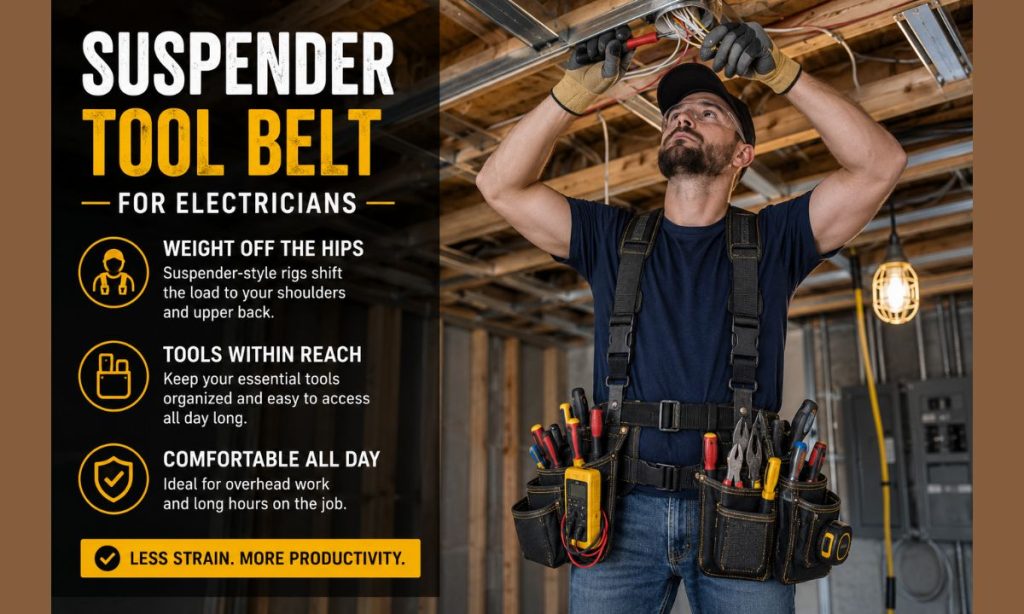
If your lower back already bothers you, a vest or suspender-style rig might be worth a look. These move the weight from your hips to your shoulders and upper back, which some workers find far more comfortable over long shifts.
Vests are popular among electricians and HVAC techs who need pockets spread across their torso instead of bunched at the waist. They also make it easier to bend, kneel, and climb ladders without pouches getting in the way.
Specialty Belts for Specific Trades
Some belts are designed around a single trade’s needs. Electrician belts often skip the hammer loop and add pockets for wire strippers and small connectors. Framer belts, on the other hand, are built around nail pouches and a solid hammer loop.
Buying a specialty belt means you’re not paying for pockets you’ll never use. It also means the pouches are shaped correctly for your most-used tools, so you’re not fighting your gear all day.
Materials: Leather vs Nylon vs Poly Blends
Leather Tool Belts
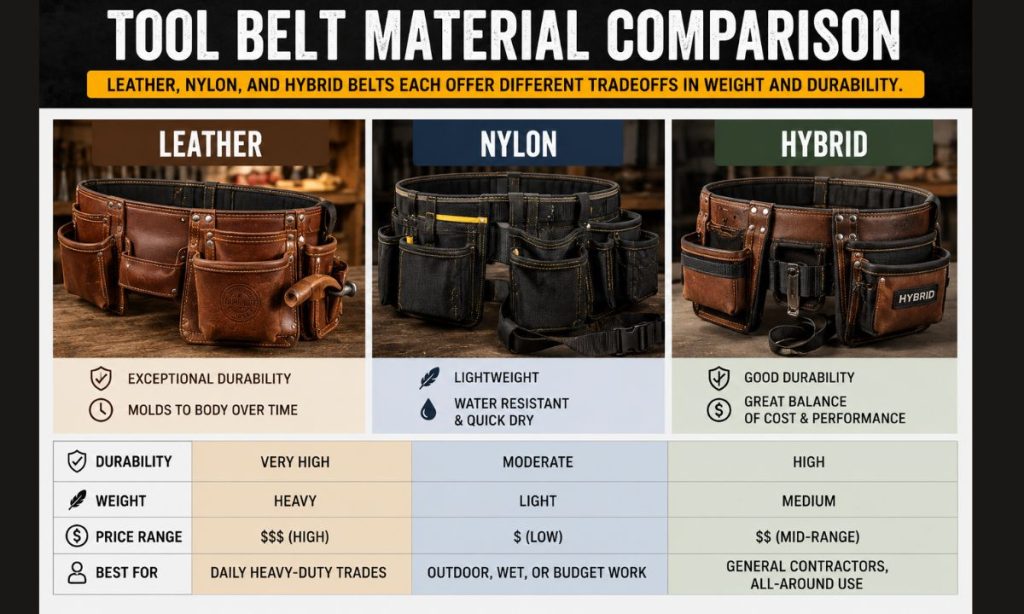
Leather is the classic choice, and for good reason. It’s tough, it molds to your body over time, and it holds its shape even after years of hard use.
The downside is weight and price. Leather belts cost more upfront and feel heavier, especially in hot weather. They also need occasional conditioning to avoid cracking.
Nylon and Ballistic Fabric Belts
Nylon belts are lighter, cheaper, and dry faster if you work outdoors in the rain. Many newer nylon belts use reinforced stitching and ballistic weave, which holds up surprisingly well.
The tradeoff is that nylon can wear out faster under constant abrasion, like dragging against concrete or scaffolding. Still, for the price, it’s hard to beat for everyday use.
Poly-Leather Hybrids
Hybrid belts try to get the best of both worlds. You’ll usually see a leather-look poly shell with reinforced stitching, giving you the classic look without the full leather price tag.
These are a solid middle-ground option if you want durability without breaking your budget. Just check the stitching quality closely, since that’s usually where hybrids cut corners.
| Material | Durability | Weight | Price Range | Best For |
| Leather | Very High | Heavy | $$$ | Daily heavy-duty trades |
| Nylon | Moderate | Light | $ | Outdoor, wet, or budget work |
| Poly-Leather Hybrid | High | Medium | $$ | General contractors, all-around use |
How to Choose a Tool Belt Based on Your Trade
Electricians
Electricians need pockets for wire strippers, voltage testers, and small connectors, not big hammer loops. Look for a belt with narrow, deep pockets and a spot for a tape measure that won’t tangle with your other gear.
Many electricians prefer suspender rigs since they’re often reaching overhead or working in tight spaces. Less weight pulling on your hips makes a real difference during long installs.
Carpenters and Framers
Carpenters usually want a heavy-duty leather or hybrid belt with a strong hammer loop and large nail pouches. You’re carrying weight all day, so a padded belt matters here more than almost any other trade.
Framers in particular benefit from a wide belt that spreads pressure across the hips instead of digging in at one spot. Ask any framer with years on the job, and they’ll tell you comfort beats style every time.
Plumbers
Plumbers deal with wrenches, pipe cutters, and fittings that are often oddly shaped. A belt with adjustable pouches or modular attachments works best since you can rearrange it as your task changes.
Since plumbers frequently kneel or crawl into tight spaces, a belt that sits a bit higher on the waist, rather than sagging low, helps avoid snagging on pipes and cabinets.
General Contractors and Handymen
If you do a bit of everything, a multi-pouch rig with a mix of pocket sizes makes the most sense. You want flexibility more than specialization here.
Look for a belt with a few larger pouches and several small ones for screws, nails, and fasteners. This keeps you from constantly swapping gear between jobs.
DIYers and Homeowners
You don’t need a $200 rig to hang a few shelves. A basic single-pouch belt or an apron-style holder covers most home projects just fine.
Focus on comfort and simplicity over capacity. You’ll use it less often, so an affordable, easy-to-store option makes more sense than a heavy-duty rig.
Fit and Comfort: What Actually Matters
Getting the Right Size
A tool belt that’s too tight digs into your hips, and one that’s too loose spins around while you work. Most belts come adjustable, but always check the manufacturer’s size chart before buying.
Measure around your waist where you’d normally wear pants, not where the belt naturally wants to sit. This small step avoids a lot of returns and exchanges.
Padding and Weight Distribution
Padded belts cost a bit more, but if you’re wearing one for a full shift, it’s worth it. Look for foam or gel padding along the lower back and hips.
Suspenders or a “quick-release” buckle system can also help distribute weight better, especially if you’re carrying more than 15 pounds of tools at once.
Quick-Release and Adjustability Features
Quick-release buckles let you take the belt off fast without unbuckling everything, which matters more than people expect when you’re constantly getting in and out of a truck.
Adjustable pouches, meanwhile, let you customize your setup as your job changes from week to week. This flexibility adds real value over time.
Pros and Cons of Popular Tool Belt Styles
Leather Multi-Pouch Belts
- Pros: Extremely durable, molds to your body, classic look
- Cons: Heavy, expensive, needs maintenance
Nylon Single-Pouch Belts
- Pros: Lightweight, affordable, dries quickly
- Cons: Less durable long-term, limited storage
Suspender/Vest Systems
- Pros: Reduces back strain, spreads weight evenly
- Cons: Takes time to get used to, can feel restrictive at first
Modular Pouch Systems
- Pros: Fully customizable, easy to rearrange
- Cons: Individual pouches can be pricier than a full pre-built rig
Step-by-Step: How to Buy the Right Tool Belt
- Identify your trade’s specific needs. List the tools you use daily and match pouch sizes to them.
- Set a budget range. Decide if you want a budget nylon option or a long-term leather investment.
- Check the sizing chart. Measure your waist and compare it to the brand’s actual specs.
- Try it on with tools loaded. An empty belt feels different from a fully loaded one.
- Test the buckle and straps. Make sure everything adjusts smoothly and locks securely.
- Read recent buyer reviews. Look for comments about stitching durability after months of use.
- Break it in gradually. Wear it for shorter shifts first, especially with leather.
Common Mistakes People Make When Buying a Tool Belt
Buying based on looks alone is one of the most common mistakes. A belt might look rugged in photos but fall apart after a few weeks of real use.
Another mistake is ignoring pouch placement. If your most-used tool sits in a hard-to-reach pocket, you’ll waste time all day reaching around your own belt.
Some buyers also skip trying the belt with a full tool load before deciding it’s comfortable. Weight changes everything, so always test it loaded, not empty.
Maintaining and Extending the Life of Your Tool Belt
Leather belts benefit from occasional conditioning, especially if you work outdoors often. A simple leather conditioner every few months prevents cracking and stiffness.
Nylon belts should be cleaned with mild soap and air-dried, never machine washed, since heat and agitation can weaken the stitching over time.
Check your stitching and buckles regularly. Catching a loose thread early can save you from losing a full pouch of tools later on.
FAQs About Tool Belts
How much should I spend on a good tool belt?
For most tradespeople, a solid mid-range belt runs somewhere between $40 and $120, depending on material and pouch count. Leather rigs on the higher end can last for years, which often makes them worth the extra cost.
What’s the best tool belt for someone with back pain?
A suspender or vest-style system usually works best since it shifts weight off your hips and onto your shoulders and upper back. Padded waist belts with wider straps can also help if you prefer a traditional style.
Do I need a different belt for each trade?
Not necessarily, but a specialty belt built for your trade usually fits your tools better. If you work across multiple trades, a modular or general-purpose rig gives you more flexibility.
How do I clean a leather tool belt?
Wipe it down with a damp cloth and mild soap, then let it air dry away from direct heat. Follow up with a leather conditioner every few months to keep it from drying out or cracking.
Can I use a tool belt for home projects only?
Yes, and you don’t need a heavy-duty rig for occasional home use. A basic single-pouch belt or nylon apron is usually enough for hanging shelves, small repairs, and weekend projects.
How many pockets do I actually need?
It depends on your trade, but most workers do fine with 4 to 8 pouches covering fasteners, hand tools, and a tape measure. More pockets often just mean more weight you don’t need.
Is nylon or leather better for outdoor work?
Nylon tends to perform better in wet or humid conditions since it dries faster and resists mildew. Leather still holds up well outdoors, but it requires more maintenance to avoid cracking.
Final Thoughts on Choosing Your Tool Belt
Picking the right tool belt comes down to matching your trade, your body, and your budget. We covered the main types, from single pouches to full suspender rigs, along with the material tradeoffs between leather, nylon, and hybrids. The goal is a belt that carries your tools without carrying you down.
My honest advice: don’t buy the flashiest belt on the shelf. Buy the one that fits your actual daily tasks and feels comfortable loaded with your real tools. A slightly higher price for better padding or stitching almost always pays off over months of regular use.
At the end of the day, your tool belt should work as hard as you do. Take the time to try one on loaded, check the stitching, and pick a style that matches your trade. Your back — and your tools — will thank you.